

A washer not draining can turn laundry day into a stressful mess. You may open the door and find standing water, soaking wet clothes, or a machine that stopped before the final spin.In many cases, the cause is a clogged washer drain hose, blocked pump filter, faulty drain pump, lid or door lock issue, too much detergent, an unbalanced load, or a home drain problem.
Before touching anything, unplug the washer. If water is leaking near an outlet, the washer smells hot, or the door is locked with water inside, stop and call for help.
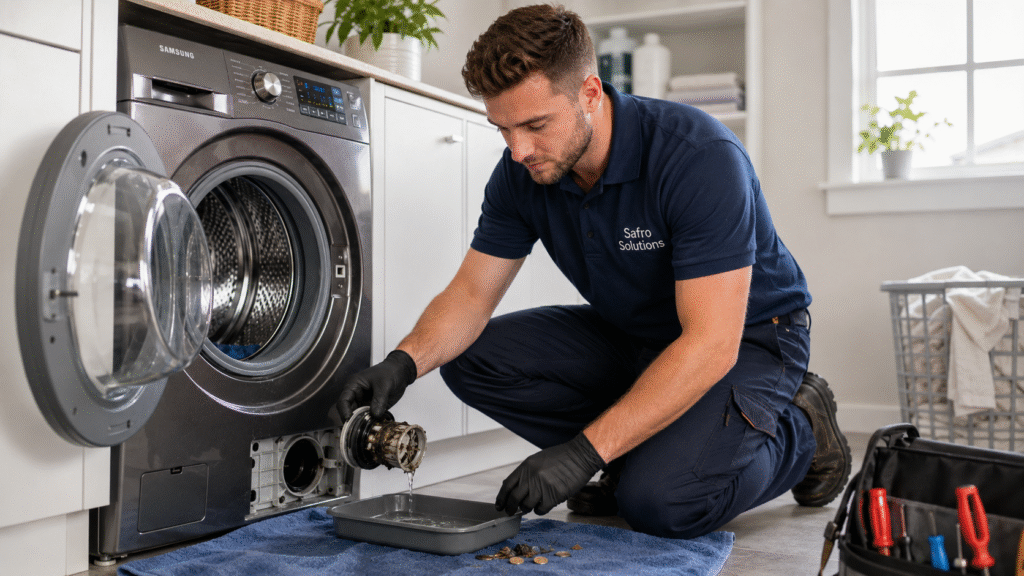
Table of Contents
- Why a Washer Stops Draining
- Quick Signs of a Drain Problem
- Safety Steps Before You Check Anything
- How to Drain Standing Water
- The 7 Most Common Causes
- Front Load vs. Top Load Washer Drain Issues
- Washer Drain Error Codes
- DIY Checks vs. When to Call a Technician
- How to Prevent Future Drain Problems
- Need Washer Repair? Safro Solutions Can Help
Why a Washer Stops Draining
A washing machine drains water through a simple path. Water leaves the drum, moves through the drain pump, passes through the drain hose, and exits into the laundry standpipe or home drain.
If one part is blocked, loose, kinked, or broken, the washer may hold water. A washing machine not draining could be as simple as lint in the filter or as serious as a failed pump.
Many homeowners notice the problem after the cycle ends. The washer not draining after cycle may leave clothes heavy, wet, and hard to move.A washer not draining or spinning often points to a drain issue, load balance issue, lid switch issue, or door lock problem.
Quick Signs Your Washer Has a Drain Problem
Use the symptoms below to understand what may be happening before you start checking parts
This table helps narrow the problem, but it does not replace a full diagnosis. A clogged hose and a weak drain pump can look similar from the outside.
Safety Steps Before You Check Anything
Always unplug the washer first. Do not reach behind the machine, remove panels, or open a pump filter while the washer is connected to power. Keep towels and a shallow pan nearby. Standing water can spill fast, especially on front-load washers.Do not force open a locked front-load washer door. It can damage the lock and flood the room.
Avoid chemical drain cleaners. They can damage rubber hoses, seals, and internal washer parts.
How to Drain Standing Water Safely
If your washer is full of water, remove the water before deeper checks.For a front-load washer, look for a small access panel near the bottom front. Some models have a drain tube and washer drain pump filter behind it. Place a shallow pan under the tube and drain slowly.
For a top-load washer, you may be able to lower the drain hose into a bucket or floor drain.
If water does not come out, do not keep pulling parts apart. A deeper blockage, stuck pump, or home drain problem may be involved.
The 7 Most Common Causes of a Washer Not Draining
1. Clogged or Kinked Drain Hose
A clogged washer drain hose is one of the first things to check. Lint, coins, hair, small socks, and fabric pieces can block the hose.
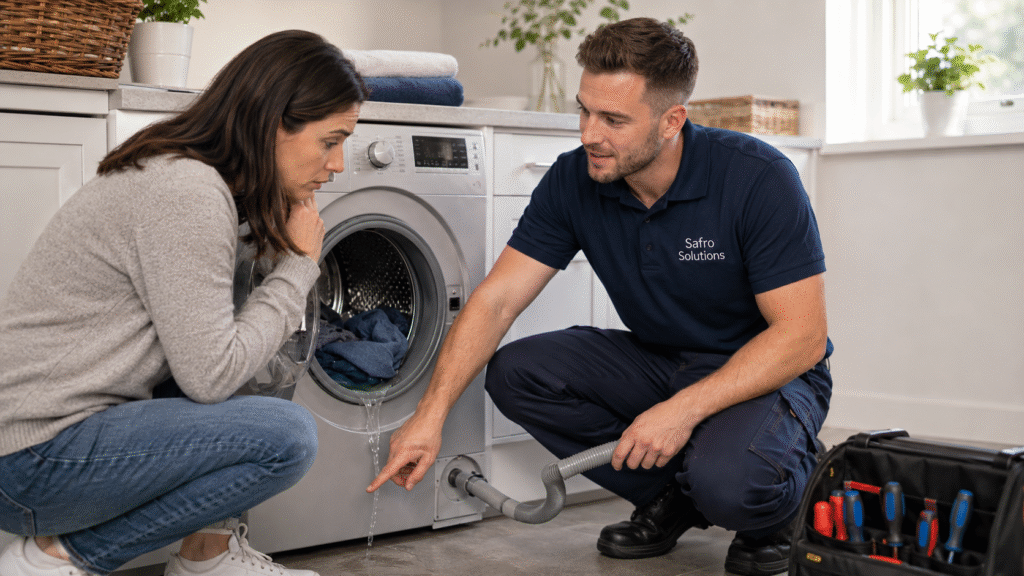
A washing machine drain hose kinked behind the washer can also stop water from flowing. This happens when the machine is pushed too close to the wall.
Pull the washer forward carefully. Look for bends, crushed spots, or a hose pushed too deep into the standpipe.
2. Blocked Drain Pump Filter or Coin Trap
A front-load washer not draining often has a blocked pump filter. This filter catches coins, lint, hair clips, buttons, and small debris before they reach the pump. When the washer drain pump filter clogged, water may drain slowly or not at all. You may hear humming because the pump is trying to work. Clean the filter only if your washer gives safe access. If the cap is stuck, do not force it.
3. Faulty or Jammed Drain Pump
The drain pump pushes water out of the washer. If the washer drain pump not working, water may stay in the drum even after the cycle ends.
Sometimes the pump is jammed by a small object. Other times, the pump motor has failed.Common signs include humming, buzzing, grinding, slow draining, or a repeated washer drain error code. A failed pump usually needs professional washer repair.
4. Lid Switch or Door Lock Problem
Top-load washers use a lid switch. Front-load washers use a door lock. These safety parts tell the washer that the lid or door is closed.
If the washer thinks the lid or door is open, it may not drain or spin. This can look like a drain clog.A top load washer not draining may stop before spin. A front-load washer may stay locked or pause with water inside. Do not bypass these safety parts.
5. Too Much Detergent or Excessive Suds
Too much detergent can create heavy suds. This is common when regular detergent is used in an HE washer or when too much HE detergent is added.Excess suds can confuse sensors and slow the drain process. The washer may pause, extend the cycle, or leave clothes wet.
Use the detergent amount recommended for your washer, load size, and soil level. More soap does not mean cleaner laundry.
6. Unbalanced or Overloaded Laundry
An overloaded washer may not drain or spin correctly. Heavy towels, blankets, rugs, and bedding can throw the drum off balance.
When the washer senses an uneven load, it may slow down or stop before the final spin. This leaves clothes wet and may make you think the drain system failed.Remove some items. Spread the load evenly. Then try one drain and spin cycle. If the same problem returns with normal loads, another part may be failing.
7. Clogged Home Drain or Standpipe Issue
Sometimes the washer is working, but the home drain is not. A clogged standpipe or laundry drain can make water back up during the drain cycle.You may see water overflow near the wall, return into the washer, or pool around the laundry area.The drain hose setup also matters. If the hose is too low, too high, or sealed too tightly into the standpipe, drainage can suffer.A washer problem needs an appliance technician. A wall drain backup may need a plumber.
Front Load vs. Top Load Washer Drain Issues
Front-load and top-load washers can have the same drain symptoms, but the parts are often different.
A front load washer not draining is often checked at the lower pump filter first. A top-load model may need lid switch testing or pump access.
Both types can suffer from detergent suds, blocked hoses, poor drain setup, or a weak pump.
Washer Drain Error Codes
Modern washers often display a code when the water does not leave the drum. LG may show an OE code. Samsung may show a no-drain or water-level warning. Whirlpool, Maytag, GE, Bosch, and other brands use model-specific codes.
Write down the code before unplugging the washer. Check the owner’s manual if you have it. If the same code returns after basic checks, the washer likely needs diagnosis.
DIY Checks vs. When to Call a Technician
Some washer checks are safe for homeowners. Others are better left to a technician.
Do not keep restarting the washer again and again. Repeated cycles can stress the pump, motor, and control parts.
How to Prevent Future Drain Problems
A few habits can help prevent a washing machine won’t drain water problem from coming back.
- Check pockets before washing. Coins, hair pins, keys, and small items often end up near the pump.
- Do not overload the drum. Give clothes room to move.
- Use the correct detergent. HE washers need HE detergent.
- Keep the drain hose straight. Do not crush it behind the washer.
- Clean the pump filter if your washer has one and the manual recommends it.
- Run a washer cleaning cycle to reduce buildup and odor.
Need Washer Repair? Safro Solutions Can Help
If your washer not draining water keeps happening, Safro Solutions can help. We provide in-home washer repair in Los Angeles and nearby areas, including Valley Village, Sherman Oaks, Studio City, Encino, Beverly Hills, Burbank, Van Nuys, Woodland Hills, Tarzana, Northridge, and Pasadena.
Our technicians inspect the drain hose, pump filter, drain pump, lid switch, door lock, and related parts. We service major washer brands, including LG, Samsung, Whirlpool, GE, Maytag, Bosch, and more.
Name: Safro Solutions
Address: Los Angeles, CA
Phone Number: (747) 250-6879
Visit Google Business Profile
Frequently Asked Questions
Q1: Can standing water damage my washer?
Yes, standing water can lead to odor, mildew, rust, and extra stress on internal parts. It is best to drain the washer safely and find the cause before using it again.
Q2: Is it safe to leave wet clothes in a washer overnight?
It is not ideal. Wet clothes can develop a sour smell and mildew. Remove the clothes once the washer is drained, then wash them again after the problem is fixed.
Q3: Why does my washer only drain slowly sometimes?
Intermittent slow draining may come from a partial clog, heavy loads, too much detergent, or a weak pump that fails under pressure. Tracking when it happens can help diagnosis.
Q4: Can a washer drain issue make my laundry room smell bad?
Yes. Trapped water, lint, detergent residue, and debris can create odor inside the drum, filter, hose, or drain area. A cleaning cycle may help after the drain problem is fixed.
Q5: Do washer drain problems get worse if ignored?
They often do. A small restriction can become a full clog. A struggling pump can also fail completely if the washer keeps running with water trapped inside.
Q6: Does the washer brand change the repair process?
Yes. Brands use different access points, filters, pumps, locks, and error codes. A technician checks the model design before opening panels or replacing parts.